How to Export Claude to Word Without Losing the Conversation Structure
July 02, 20266 min read
Moving Claude to Word is not always the same task. Sometimes you need the whole conversation as an editable Word file. Other times you only need Claude to turn the final answer into a clean DOCX, or you just want to paste one useful section into an existing document.
The safest workflow depends on how much context you need to preserve. The methods below cover the practical ways to export a Claude conversation to Word without pretending there is one universal native export button for every account.
Use Claude Exporter to Save the Full Conversation as Word
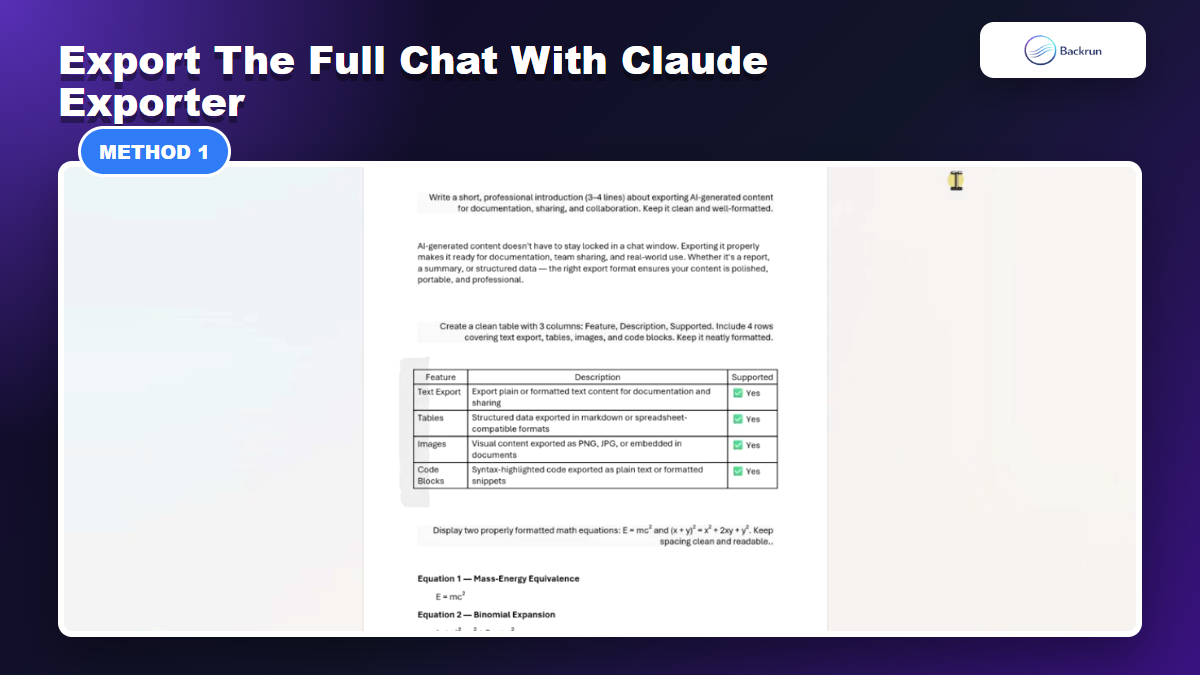
Claude Exporter is the strongest option when you need the full conversation in Word.
If you need the full chat, Claude Exporter is the cleanest workflow. It is built for exporting Claude conversations into document formats, including Word, so you do not have to copy every prompt and answer manually.
Install Claude Exporter from the Chrome Web Store and review the permissions.
Open the Claude conversation you want to archive.
Load the full thread so all important messages are visible.
Choose Word or DOCX from the export options.
Open the file in Microsoft Word and check headings, lists, tables, links, images, and code blocks.
Best for: full research threads, project records, client conversations, coding discussions, and lessons where the back-and-forth matters.
Advantage: it preserves the conversation as a repeatable export instead of a fragile copy-paste session.
Limitation: browser extensions require a trust decision. Do not export confidential chats unless your team approves the extension and storage workflow.
Quick check: after opening the DOCX, scan the first and last messages to confirm the export did not miss hidden or collapsed parts of the thread.
Ask Claude to Create a DOCX File You Can Open in Word
A Claude-generated DOCX is useful when you want a polished document, not a raw transcript.
When the goal is a clean document rather than a raw transcript, ask Claude to create a Word-ready file from the conversation. This works well after Claude has already helped you produce a report, SOP, proposal, meeting summary, or lesson plan.
Tell Claude what document to create, including title, headings, sections, bullets, tables, and any footer notes.
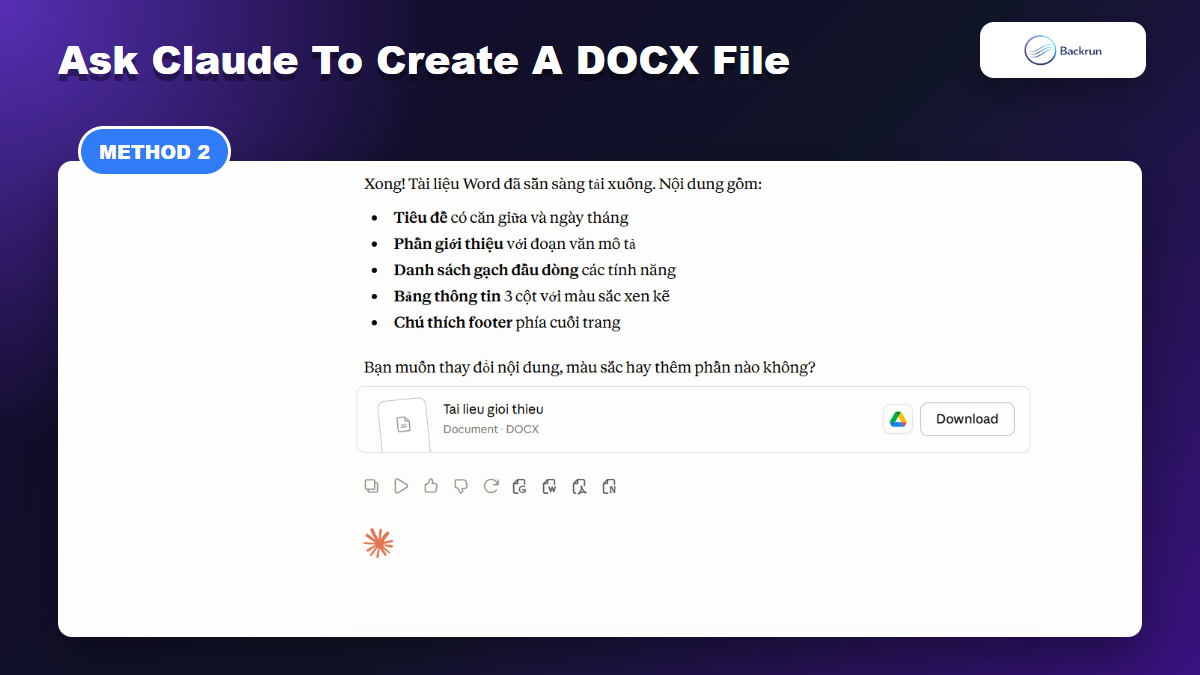
Ask for a downloadable DOCX file or a Word document card if your Claude workspace supports file creation.
Review the file card and confirm the content matches the final version you want.
Download the DOCX or use the available Drive/Word export icon when it appears.
Open the file in Word and check spacing, styles, tables, and special characters.
Best for: polished deliverables made from the conversation, not full chat archives.
Advantage: Claude can create a cleaner document structure before the file reaches Word.
Limitation: file creation and export icons may depend on your account, model, workspace, and browser state. If you do not see a DOCX card, use Claude Exporter or manual copy-paste.
Practical prompt: ask Claude to make the document "Word-ready" with short paragraphs, clear heading levels, and simple tables before generating the file.
Copy Selected Claude Messages into Word Manually
Manual copy-paste works when you only need a short part of the conversation.
Manual copy-paste is still useful when you only need one answer, one outline, or a few paragraphs. It is not the best way to export an entire Claude conversation, but it is fast and transparent for short sections.
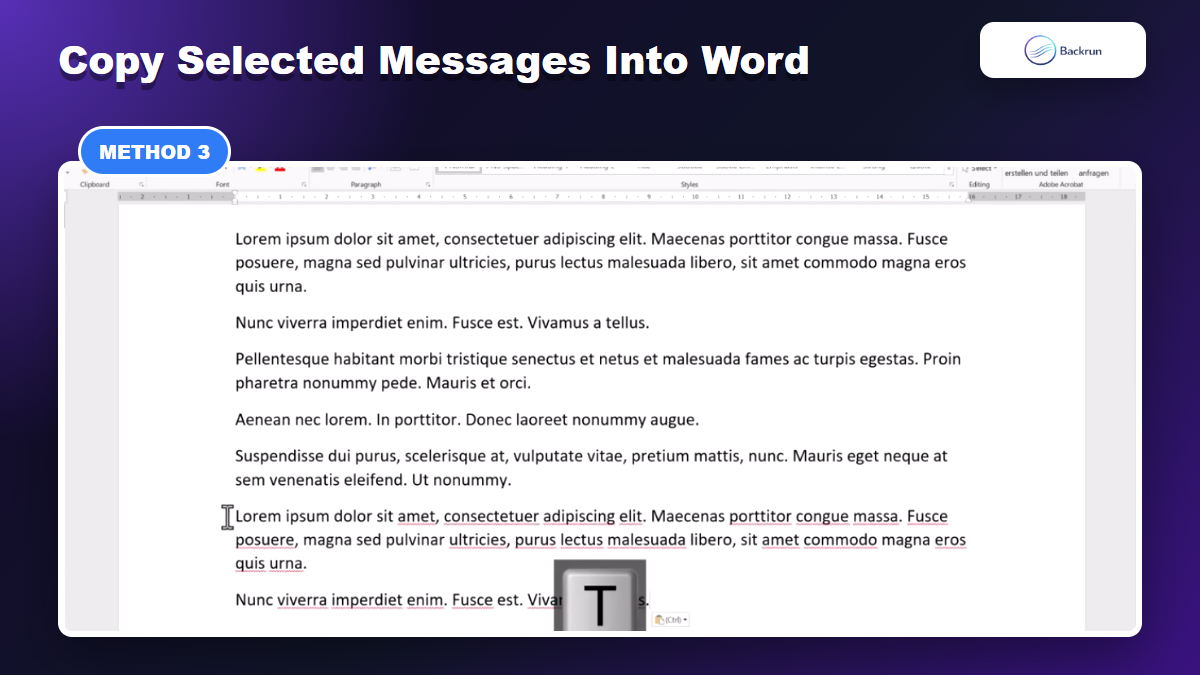
Select only the useful Claude message, not the whole page.
Paste into Microsoft Word and inspect the formatting.
Use Paste Options such as Keep Text Only when Claude's copied formatting looks inconsistent.
Rebuild headings with Word styles instead of relying on manual bold text.
Add missing prompt context if the answer depends on earlier conversation turns.
Best for: short answers, snippets, outlines, and existing Word documents that only need one Claude section.
Advantage: no extension and no extra file conversion.
Limitation: long chats, code blocks, tables, and images are easy to damage with manual paste. If you are copying more than a screen or two, switch methods.
Convert a Claude PDF Export into Word
PDF-to-Word is a fallback when you already have a PDF copy of the Claude chat.
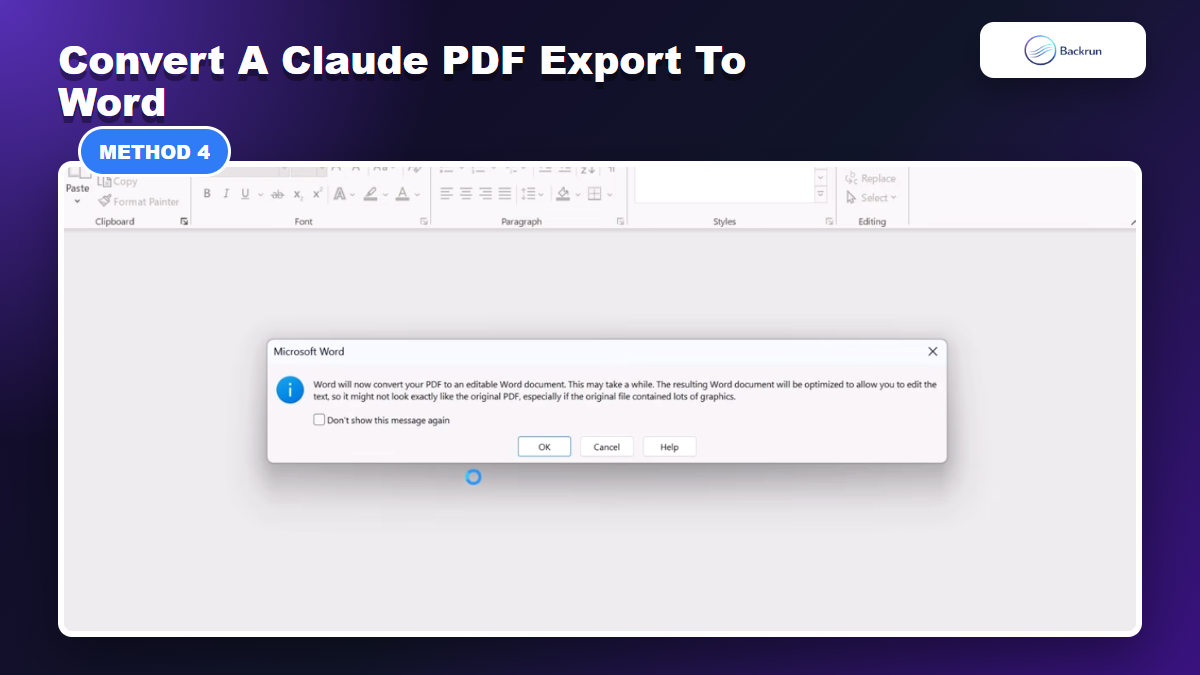
PDF-to-Word is a fallback, not the first choice. Use it when you already saved a Claude conversation as PDF and now need an editable Word version. Word can open many PDFs and convert them into editable documents, but the layout may change.
Export or save the Claude conversation as PDF using your preferred method.
Open Microsoft Word and choose the PDF file.
Accept the conversion warning when Word explains that it will create an editable document.
Save the converted file as DOCX.
Check page breaks, tables, images, and line spacing before sharing.
Best for: recovering an editable file from a PDF archive.
Advantage: it can rescue a chat you already saved in a non-editable format.
Limitation: PDF conversion can change page breaks and table layout. A general PDF-to-Word guide notes the same risk, so review the output carefully before treating it as a clean Word file.
Quick Recap
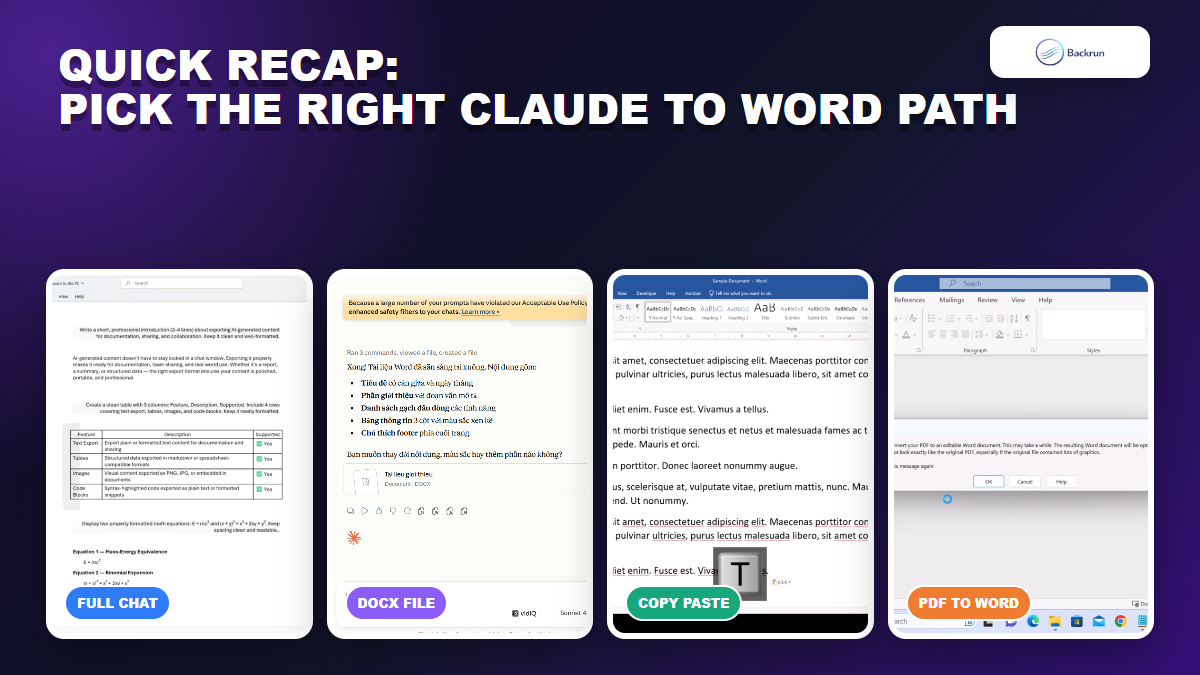
Choose the workflow based on whether you need a full chat, a polished DOCX, a short excerpt, or a PDF recovery path.
The right Claude to Word workflow depends on what you are actually trying to preserve: the full conversation, a polished document, a short excerpt, or a PDF archive.
Method
Use it when
Main strength
Main caution
Claude Exporter
You need the full chat
Best complete conversation export
Review extension permissions
Claude-generated DOCX
You want a polished document from the conversation
Cleanest document-first workflow
File creation may not appear for every account
Manual copy-paste
You need a short excerpt
Fast and simple
Weak for long chats and tables
PDF to Word
You already have a PDF archive
Good recovery option
Formatting can shift during conversion
For a full conversation, use Claude Exporter. For a polished deliverable, ask Claude to create a DOCX file. For a short section, paste into Word and clean the formatting. For an existing PDF, convert it to DOCX only after checking the layout. That gives you a practical way to move Claude to Word without losing the structure that makes the conversation useful.